
 |
Charles Napier Bell
|
Businessman, historian.
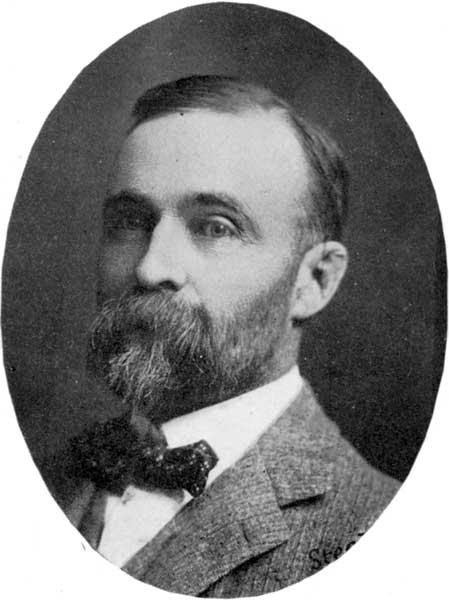
Born at Perth, Ontario on 5 February 1854, the son of James Bell, the Registrar of Lanark County and the grandson of the first Presbyterian minister in the county. Bell had a taste for adventure, and in 1866, at the age of twelve, he ran off to join the Perth Rifle Company as a bugler, to fight the Fenians. A much greater adventure presented itself four years later when he set out for the west with Garnet Wolseley, again as a bugler. He traveled west with the young Sam Steele, later a famous officer of the North West Mounted Police and the commander of Lord Strathcona’s Horse in the South African War. The two men remained close friends and in their later years and were neighbors in Winnipeg.
Like many other troops who came west with the Wolseley Expedition, Bell did not return to Ontario. He spent a year, in 1872-1873, hunting and trading along the Saskatchewan River. Lieutenant-Governor Morris asked him to write a report on his experiences when he returned to Manitoba, and, in his report, he commented on the wild game situation, especially the state of the bison herds. Bell began working in Winnipeg as a customs officer for the Dominion and was a participant in the December 1878 ceremony to mark the opening of the first railway to Winnipeg. In 1886 he became Secretary Treasurer of the Winnipeg Grain Exchange and, the next year, he was hired to be Secretary of the Winnipeg Board of Trade. He was the original secretary of the Winnipeg Industrial Exhibition in 1891 and he served as President of the Canadian Club of Winnipeg in 1912. He had various business interests, including being Secretary-Treasurer of Empire Motors Limited.
He was married to Alice Maud Georgina Bell (1860-?) of Toronto, Ontario with whom he had four children: Frederick Charles “Fred” Bell (1883-1971), Percy George Bell, Nora A. Bell (1888-?), and Airdrie Edna Bell (1901-1985, wife of Alexander Thomas Cameron). He was a member of the Manitoba Club, St. Charles Country Club, AF & AM (P.G.M. Man. Grand Lodge; 33rd Degree Supreme Council). He belonged to many other societies, among them the Minnesota Historical Society and the Geographical Society of San Francisco. He was a fellow of the Royal Geographical Society and, in 1914, was given an honorary degree by the University of Manitoba for his work with the Manitoba Historical Society. He was a member of the Prince Rupert No. 1 Masonic Lodge. As the Grand Master of the Masonic Lodge in 1895, he laid the cornerstone of the new Masonic Temple at the corner of Ellice Avenue and Donald Street.
Bell was an athlete of some note when he was young, especially in the sport of skating. He was famous for having skated from Winnipeg to Selkirk on the Red River in just two and one quarter hours in 1877, and he was also a talented figure skater. He coached speed skater Jack McCulloch, who won the 1897 World Speed Skating Championship in Montréal, and he is credited with having introduced figure skating into western Canada.
On the second floor of his house at 121 Carlton Street, he created a fine library, containing many rare maps of western Canada and a remarkable collection of books. W. E. Ingersoll later remembered that “if you were a special friend he would take you home and show you the latest musty old paper he had acquired for the Manitoba Historical Society. These papers were ancient and some were smelly with age; but Charlie Bell was always able to point out that there was some special reason that they should be in the possession of the MHS.” [1] Ingersoll’s amused tolerance was probably shared by many fellow Winnipeggers, unaware of Bell’s role in saving a great deal of historical documentation from destruction. Bell was intelligently curious about the world around him; his interests included natural as well as human history. Among his friends was A. H. Reginald Buller, a noted botanist and professor at the University of Manitoba, who lived nearby and visited often. Bell’s daughter remembered going on nature hikes at Lower Fort Garry and at their summer cottage at Minaki with her father. [2]
Bell was one of the founders of the Manitoba Historical and Scientific Society, serving as its President from 1889 to 1891, and again from 1913 to 1929 (holding the record for the longest serving MHS President). Along with Professor Chester Martin, Provincial Librarian W. J. Healy, and others, he revived the society in the late 1920s and early 1930s. Bell was described as “a genial, sunny soul, who seems to carry a summery atmosphere with him.” [3] This personality, combined with his passionate interest in the subject, made him one of the Historical Society’s most effective activists. [4]
He died at his cottage at Minaki, Ontario on 29 August 1936 and was buried in the Old Kildonan Cemetery. There are extensive papers at the Archives of Manitoba. Bell’s maps were bequeathed to Queens University (Kingston).
Nephew of Robert Bell.
His articles for the Manitoba Historical Society:
Navigation of Hudson Bay and Straits
MHS Transactions, Series 1, No. 7, Read 1883Some historical names and places of the Canadian North-West
MHS Transactions, Series 1, No. 17,Read 22 January 1885Some Red River Settlement history
MHS Transactions, Series 1, No. 29, Read 28 April 1887Henry’s journal, covering adventures and experiences in the fur trade on the Red River 1799-1801
MHS Transactions, Series 1, No. 31, Read 4 May 1888Original letters and other documents relating to the Selkirk Settlement
MHS Transactions, Series 1, No. 33, Read 17 January 1889Annual Report for the Year 1888 and President’s Inaugural Address
MHS Transactions, Series 1, No. 34, Read 28 February 1889Continuation of Henry’s journal: covering adventures and experiences in the fur trade on the Red River, 1799-1801
MHS Transactions, Series 1, No. 35Henry’s journal
MHS Transactions, Series 1, No. 37, Read 9 May1889Seven Oaks: An Account of the Affair of Seven Oaks; and a Report of Proceedings of the Gathering for the Unveiling of the “Seven Oaks Monument,” June 19th, 1891
MHS Transactions, Series 1, No. 43, Read 1891The earliest fur traders on the upper Red River and Red Lake, Minn., 1783-1810
MHS Transactions, Series 2, No. 1, Read 1928A prehistoric copper hook
MHS Transactions, Series 2, No. 2, Read 1927The old forts of Winnipeg, 1738-1927
MHS Transactions, Series 2, No. 3, Read 1927The journal of Henry Kelsey, 1691-1692 : the first white man to reach the Saskatchewan River from Hudson Bay, and the first to see the buffalo and grizzly bear of the Canadian Plains--with notes on some other experiences of the man
MHS Transactions, Series 2, No. 4, Read 24 May 1928The Great Winnipeg Boom
Manitoba History, Number 53, October 2006
See also:
Historic Sites of Manitoba: Principal Meridian Cairn (RM of St. Francois Xavier)
1. Winnipeg Free Press, 11 May 1963.
2. Winnipeg Free Press, 6 March 1971.
3. Winnipeg Tribune, 18 February 1911.
4. Information for this article was taken from the various clippings under “C. N. Bell” in the Biographical Scrapbooks, Legislative Library of Manitoba.
1901 and 1911 Canada censuses, Automated Genealogy.
Who’s Who in Western Canada: A Biographical Dictionary of Notable Living Men and Women of Western Canada, Volume 1, edited by C. W. Parker, Vancouver: Canadian Press Association, 1911.
A History of Manitoba: Its Resources and People by Prof. George Bryce, Toronto: The Canadian History Company, 1906.
“Pioneers of Winnipeg,” Winnipeg Tribune, 18 February 1911, page 11.
The Story of Manitoba by F. H. Schofield, Winnipeg: The S. J. Clarke Publishing Company, 1913.
Pioneers and Prominent People of Manitoba, Winnipeg: Canadian Publicity Company, 1925.
“Special opening of the Empire Motors Ltd.,” Winnipeg Tribune, 27 June 1925, page 17.
“Pioneer dies,” Winnipeg Tribune, 29 August 1936, page 1.
Death registration [Frederick Charles Bell], British Columbia Vital Statistics.
Obituary [Airdrie Edna Cameron], Winnipeg Free Press, 4 November 1985, page 40.
Dictionary of Manitoba Biography by John M. “Jack” Bumsted, Winnipeg: University of Manitoba Press, December 1999, 288 pages.
We thank Stan Barclay and Glen Toews for providing additional information used here.
This page was prepared by Gordon Goldsborough.
Page revised: 19 January 2026
Memorable Manitobans
This is a collection of noteworthy Manitobans from the past, compiled by the Manitoba Historical Society. We acknowledge that the collection contains both reputable and disreputable people. All are worth remembering as a lesson to future generations.
Search the collection by word or phrase, name, place, occupation or other text:
Custom SearchBrowse surnames beginning with:
A | B | C | D | E | F | G | H | I | J | K | L | M | N | O | P | Q | R | S | T | U | V | W | Y | ZBrowse deaths occurring in:
1975 | 1976 | 1977 | 1978 | 1979 | 1980 | 1981 | 1982 | 1983 | 1984 | 1985 | 1986 | 1987 | 1988 | 1989 | 1990 | 1991 | 1992 | 1993 | 1994 | 1995 | 1996 | 1997 | 1998 | 1999 | 2000 | 2001 | 2002 | 2003 | 2004 | 2005 | 2006 | 2007 | 2008 | 2009 | 2010 | 2011 | 2012 | 2013 | 2014 | 2015 | 2016 | 2017 | 2018 | 2019 | 2020 | 2021 | 2022 | 2023 | 2024 | 2025 | 2026
Send corrections and additions to this page
to the Memorable Manitobans Administrator at biographies@mhs.mb.caCriteria for Memorable Manitobans | Suggest a Memorable Manitoban | Firsts | Acknowledgements
Help us keep
history alive!