
 |
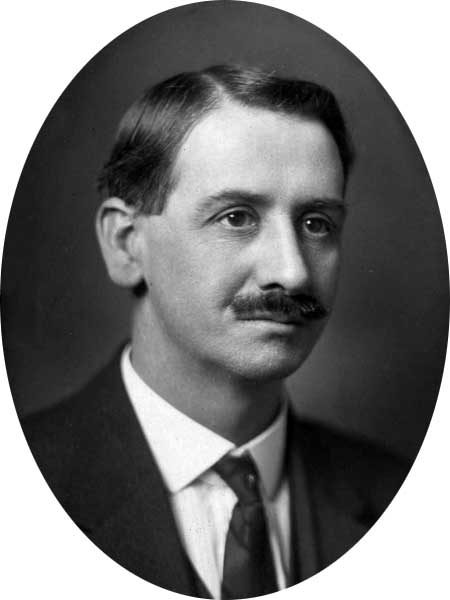
Richard Arthur Rigg
|
Labour leader, socialist, MLA (1915-1917).
Born at Todmorden, Lancashire, England on 5 January 1872, he worked in a cotton mill while in grade school and was employed full-time from the age of 12. He began his theological studies in 1891 and had abandoned the Methodist ministry on coming to Canada in 1903.
By 1909 he was the Winnipeg representative of the Bookbinders’ Union. He ran unsuccessfully in the 1911 federal general election. He was the first nominee of the Labour Representation Committee to win a seat on the Winnipeg City Council when elected in 1913. A year later he was sent to represent the Trades and Labor Council at the American Federation of Labor convention in Philadelphia. He was elected to the Manitoba Legislature in 1915 from Winnipeg North. He agreed to co-operate with the government’s national registration program in 1916 when he was assured that registration was not a prelude to conscription, but he subsequently withdrew his support.
Rigg joined the army in 1917 and insisted on being sent overseas. He resigned his provincial seat to contest the 1917 federal election in Winnipeg North as the nominee of the Manitoba section of the Canadian Labour Party. He was described by the Manitoba Free Press in 1918 as “the outstanding figure in the labour and radical world of Winnipeg,” but was not active in the Winnipeg General Strike. Rigg subsequently opposed the One Big Union until December 1919 when he was appointed Western Superintendent of the Employment Service of Canada, rising in 1922 to its head. He retired to British Columbia around 1945.
He was married twice, first to Edith Emily Bradshaw (1875-1946) in England and they had five children before separating in 1923: Wilfred Cecil “Wilf” Rigg (1898-1993), Constance Edith Rigg (1900-1993, wife of Walter Sheldon Dalton), Madeline “Madge” Rigg (1905-1993, wife of William John Justice), Gwendoline “Gwen” Rigg (1907-?, wife of George Alexander Cruickshank), and Vincent Richard “Vince” Rigg (1911-1984). On 28 January 1946, a few days after the death of his estranged first wife, he married Eva May Wilson (1898-1988) at New Westminster, British Columbia.
He died at North Vancouver, British Columbia on 1 August 1964 and was buried in a military grave at Surrey. His papers are at the Archives of Manitoba.
Birth registration [Eva Wilson], Manitoba Vital Statistics.
1911 Canada census, Automated Genealogy.
Birth, marriage, and death registrations, Manitoba Vital Statistics.
“Personal,” Winnipeg Tribune, 28 March 1923, page 21.
Marriage registration [Richard Arthur Rigg, Eva May Wilson], British Columbia Vital Statistics.
Death registration, British Columbia Vital Statistics.
“Former Manitoba labor leader dies,” Winnipeg Free Press, 6 August 1964, page 28.
Times of Trouble: Labour Quiescence in Winnipeg 1920-1929 by David Edward Hall, MA thesis, University of Manitoba, 1983, page 35.
Death registration [Eva May Rigg], British Columbia Vital Statistics.
Obituary [Constance Edith Dalton], Winnipeg Free Press, 23 October 1993, page 42.
Dictionary of Manitoba Biography by John M. “Jack” Bumsted, Winnipeg: University of Manitoba Press, December 1999, 288 pages.
Obituaries and burial transcriptions, Manitoba Genealogical Society.
We thank Oliver Bernuetz (Legislative Library of Manitoba) for providing additional information used here.
This page was prepared by Gordon Goldsborough.
Page revised: 13 June 2022
Memorable Manitobans
This is a collection of noteworthy Manitobans from the past, compiled by the Manitoba Historical Society. We acknowledge that the collection contains both reputable and disreputable people. All are worth remembering as a lesson to future generations.
Search the collection by word or phrase, name, place, occupation or other text:
Custom SearchBrowse surnames beginning with:
A | B | C | D | E | F | G | H | I | J | K | L | M | N | O | P | Q | R | S | T | U | V | W | Y | ZBrowse deaths occurring in:
1975 | 1976 | 1977 | 1978 | 1979 | 1980 | 1981 | 1982 | 1983 | 1984 | 1985 | 1986 | 1987 | 1988 | 1989 | 1990 | 1991 | 1992 | 1993 | 1994 | 1995 | 1996 | 1997 | 1998 | 1999 | 2000 | 2001 | 2002 | 2003 | 2004 | 2005 | 2006 | 2007 | 2008 | 2009 | 2010 | 2011 | 2012 | 2013 | 2014 | 2015 | 2016 | 2017 | 2018 | 2019 | 2020 | 2021 | 2022 | 2023 | 2024 | 2025 | 2026
Send corrections and additions to this page
to the Memorable Manitobans Administrator at biographies@mhs.mb.caCriteria for Memorable Manitobans | Suggest a Memorable Manitoban | Firsts | Acknowledgements
Help us keep
history alive!