
 |
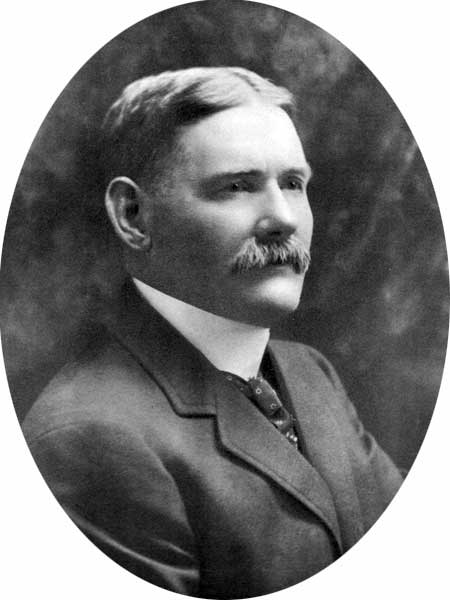
Thomas Graham Mathers
|
Lawyer, judge.
Born at Lucknow, Ontario on 16 April 1859, son of Christopher Mathers formerly of County Armagh, Ireland, and Rachel Graham of County Fermanagh, Ireland. He was educated at Lucknow and Kincardine, Ontario. He worked as editor of the Manitoba Liberal newspaper at Portage la Prairie. He started the study of law in 1884 and was called to the Manitoba Bar in 1890.
He was a member of the law firm Munroe, West and Mathers (1890-1895), Martin, Mathers and Anderson (1895-1897), and Howell and Mathers (1897-1905). In the latter year, he was appointed a Judge of the Court of King’s Bench, elevated to Chief Justice in February 1910. He was Chairman of the Board of License Commissioners from 1899 to 1900, and an Alderman of the City of Winnipeg from 1898 to 1899. He served on the founding Advisory Board for the Winnipeg Foundation, in 1921.
He served as Chairman of several Commissions: a Hospital Commission appointed by the City of Winnipeg in 1908; the Royal Commission to inquire into escape of Krafchenko from City Police Station (1914), the Royal Commission to inquire into construction of Manitoba Parliament Buildings (1915), the Royal Commissioner to inquire into construction of the Manitoba Law Courts (1916), the Royal Commission appointed by Dominion Government to inquire into Metal Trades in Winnipeg (1918), and the Royal Commission appointed by Dominion Government to inquire into Industrial Relations between employers and employed in Canada (1919).
The 1919 Industrial Commission that bore his name found much unrest in Canada. It concluded that economic conditions rather than foreign aliens were responsible for this unrest, recommending as a way to a better future a package of reform measures that included minimum wage legislation, an eight hour day, unemployment and health insurance, and free collective bargaining. As judge he granted bail to the eight leaders of the Winnipeg General Strike charged with seditious conspiracy, but he refused to allow bail to aliens arrested at the same time under the Immigration Act, on the grounds that his court had jurisdiction to grant habeas corpus only in criminal cases.
He married Jessie Waugh, a daughter of Richard Waugh, in 1892 with whom he had a son and a daughter. He was a founding member of the St. Charles Country Club.
He died at Rochester, Minnesota on 16 August 1927 and was buried in the St. John's Cathedral Cemetery. He is commemorated by Mathers Avenue in Winnipeg.
See also:
Manitoba Business: D’Arcy and Deacon
“Cases from Chief Justice Mathers’ Legal Ethics,” University of Manitoba Law School, 1983.
Who’s Who in Western Canada: A Biographical Dictionary of Notable Living Men and Women of Western Canada, Volume 1, 1911. C. W. Parker, editor. Canadian Press Association, Vancouver.
The Leading Financial, Business & Professional Men of Winnipeg, published by Edwin McCormick, Photographs by T. J. Leatherdale, Compiled and printed by Stone Limited, c1913. [copy available at the Archives of Manitoba]
Pioneers and Prominent People of Manitoba, Winnipeg: Canadian Publicity Company, 1925.
“Chief Justice of Manitoba dead,” Brandon Sun, 16 August 1927, page 1.
“Body of Chief Justice is expected to arrive today,” Manitoba Free Press, 18 August 1927, page 2.
Dictionary of Manitoba Biography by John M. “Jack” Bumsted, Winnipeg: University of Manitoba Press, December 1999, 288 pages.
The Court of Queen’s Bench of Manitoba, 1870-1950: A Biographical History by Dale Brawn, Toronto: Osgoode Society for Canadian Legal History, 2006, 432 pages.
We thank John Perrin for providing additional information used here.
This page was prepared by Gordon Goldsborough.
Page revised: 4 June 2026
Memorable Manitobans
This is a collection of noteworthy Manitobans from the past, compiled by the Manitoba Historical Society. We acknowledge that the collection contains both reputable and disreputable people. All are worth remembering as a lesson to future generations.
Search the collection by word or phrase, name, place, occupation or other text:
Custom SearchBrowse surnames beginning with:
A | B | C | D | E | F | G | H | I | J | K | L | M | N | O | P | Q | R | S | T | U | V | W | Y | ZBrowse deaths occurring in:
1975 | 1976 | 1977 | 1978 | 1979 | 1980 | 1981 | 1982 | 1983 | 1984 | 1985 | 1986 | 1987 | 1988 | 1989 | 1990 | 1991 | 1992 | 1993 | 1994 | 1995 | 1996 | 1997 | 1998 | 1999 | 2000 | 2001 | 2002 | 2003 | 2004 | 2005 | 2006 | 2007 | 2008 | 2009 | 2010 | 2011 | 2012 | 2013 | 2014 | 2015 | 2016 | 2017 | 2018 | 2019 | 2020 | 2021 | 2022 | 2023 | 2024 | 2025 | 2026
Send corrections and additions to this page
to the Memorable Manitobans Administrator at biographies@mhs.mb.caCriteria for Memorable Manitobans | Suggest a Memorable Manitoban | Firsts | Acknowledgements
Help us keep
history alive!