Link to:
Significant Dates | Historical Assessment | Photos & Coordinates | Sources
Other Names: Halfway Hospital, Hodgson Hospital
This property existed on the reserve land of Peguis First Nation on Treat 1 Territory.
Date(s)
Event
1924
Department of Indian Affairs appointed the first medical officer for the agency, Dr. James Bird, who lived in on-reserve at least part time. He was joined that year by a nurse as well.
1930
Fisher River Nursing Station opened on Peguis reserve, along the banks of the Fisher River, to serve the members of the Peguis, Fisher River, and Jackhead (Kinonjeoshtegon) bands
6 July 1940
Fisher River Indian Hospital opened
1964
Newspaper reports that the federal government promised to build a new hospital to replace Fisher River Indian Hospital
18 June 1973
Fisher River Indian Hospital closes
24 September 1973
New federal Percy E. Moore Federal Hospital officially opens in Hodgson
Fisher River Indian Hospital (FRIH) opened in 1940 and operated until 1973, when the new Percy E. Moore Hospital opened in nearby Hodgson. The FRIH at Peguis First Nation, north of Winnipeg, was one of at least 29 segregated health care facilities owned and usually operated by the federal government between the 1930s and the 1980s. The hospitals were established to provide low-cost health care to First Nations and Inuit patients. Although initially established to isolate Indigenous patients with tuberculosis (TB), the facilities operated as general care hospitals. [1] The Indian hospital system was a part of the larger system of colonialism and assimilation on the part of the federal government.
Maureen Lux argues that many First Nations peoples in western Canada welcomed federal Indian hospitals, at least initially. Those who had signed the 11 Numbered Treaties understood health care and medicines to be part of their treaty agreements, and they saw the hospitals as government recognition of this obligation. The federal government, however, did not recognize health care as a treaty obligation and instead approached Indigenous health care as a “humanitarian or moral obligation.” [2] In 1946, Dr. Percy E. Moore, the superintendent of Indian Health Services, argued that “although neither law nor treaty imposes such a duty, the Federal Government has, for humanitarian reasons, for self-protection, and to prevent spread of disease to the white population, accepted responsibility for health services to the native community.” [3]
More than 20 years later, the federal government maintained this position, noting that “despite popular misconceptions of the situation and vigorous assertions to the contrary, neither the federal nor any other government has any formal obligations to provide Indians, or anyone else, with free medical services.” [4]
The first federal Indian Hospital was established in 1936 at Fort Qu’Appelle, and three Indian hospitals followed quickly in Manitoba: Fort Alexander Indian Hospital (Pine Falls/Sagkeeng First Nation) in 1938, Dynevor Indian Hospital near Selkirk in 1939, and Fisher River Indian Hospital in 1940. Lux explains that early Indian hospitals were set-up to treat school-age children, many of whom attended Residential Schools, and pregnant women. [5] Fisher River Indian Hospital opened in a new building constructed using almost solely Indigenous labour (except for the plumbing). Construction was halted by the war in 1939, but resumed in time for the nursing station to close and the hospital to open in summer 1940. [6] The hospital replaced the smaller nursing station that had been in operation since 1930. The new hospital was meant to serve the Peguis, Fisher River, and Jackhead (Kinonjeoshtegon) bands.
According to Dr. E. L. Ross of the Sanatorium Board of Manitoba, FRIH was established primarily to treat tuberculosis patients but it served as a general hospital. Beds for tubercular patients were located on the ground floor with general care beds on the second floor. The hospital was initially staffed by a doctor, a director of nursing, two registered nurses, and auxiliary nurses and ward aides from the community. Early documents indicate the hospital had 24 beds when it opened and 30 beds by 1947, but elders including former hospital staff members recall 32 to 38 beds in operation. Benita Cohen noted in her study of FRIH for the Royal Commission on Aboriginal Peoples that former employees made “frequent references to overcrowding and the need to put extra beds and/or cribs in the wards” in her interviews, noting this overcrowding many explain the discrepancy in the ‘official’ number of beds and elder and staff recollections. [7]
Overcrowding at FRIH was symptomatic of the chronic underfunding of the federal Indian hospital system in comparison to other Canadian hospitals. Early Indian hospitals like FRIH demonstrated that patients could be treated at 50% of the cost of paying for treatment spots for First Nations and Inuit patients in municipal hospitals or provincial sanatoriums. A 1940 article commenting on the government’s purchase of the Dynevor Indian Hospital and the construction of the FRIH noted that “these hospitals are being established as a means of providing needed care for sick Indians at a cost less than that of admitting them to public institutions.” [8] These cost savings, coupled with public health discourse about high rates of tuberculosis amongst Indigenous peoples, led to the expansion of the federal Indian hospital system and, with it, increased health surveillance of Indigenous communities. The underfunding also resulted in sub-par facilities, staffing, and patient care. Many of these situations were evident at FRIH.
Conditions resulting from underfunding were evident at Fisher River Indian Hospital. Lack of clean drinking water and sewer infrastructure were an ongoing problem. A 1953 memorandum from the Public Health Engineering division about the water supply at FRIH and Peguis reserve reads, “The Fisher River is believed to be polluted by sewage from the Indian Hospital, the Agency Houses, Indians living along the banks and other sources outside the reserves.” [9] Prior to this, a formal complaint had been made about the polluted water at Fisher River Indian Hospital from the Manitoba Indian Brotherhood (MIB) to the Minister of Citizenship and Immigration and the Department of National Health and Welfare. The MIB argued that “the Indians of the Peguis and Fisher River Reserves are suffering from an inadequate supply of good water. The sewage from the Hospital and Fisher River Agency flows into the river, and the water is so contaminated as to be unfit for human consumption.” [10]
A February 1971 report found that medical equipment at FRIH was also in poor condition. The Director of Nursing’s monthly reported that “essential equipment had been either misused or completely broken and had been tucked away (not even neatly) in corners or cupboards without attempt at obtaining repair or replacement.” The report goes on to say that this issue resulted in the transfers of sick patients, particularly those suffering from respiratory issues, as well as left the already sparse hospital with less equipment and in an un-safe condition. [11] It is unclear how this issue occurred or if it was resolved but it signals the impact of poor-quality medical equipment on patient care.
Patient care at federal Indian hospitals, including FRIH, was impacted by many factors and could vary by hospital, time period, and staff. Lux argues that “patient experiences—life and death—in Indian Hospitals varied tremendously, making any description partial and incomplete.” [12] Racism, however, was common in the hospitals. Although the staff sometimes included Indigenous workers in lower-ranking positions like orderlies, cooks, nursing aides, or cleaning staff, doctors and RNs were non-Indigenous. There are no publicly-available patient testimonies from FRIH, but a 1972 memorandum points to racism amongst staff toward the local First Nations community. In the document, the Director of Nursing reported on a relationship between a presumably non-Indigenous staff member and a local First Nations man. The report states that “there appeared to be some problems in respect to behaviour as they related to [name redacted]’s work. [The staff member] felt she was being picked upon because she was going out with a local Indian lad and that other members were discriminating against them.” [13] While this incident relates to staff experience rather than patient experience, it points to on-going racism in the hospital.
Records relating to the hospital also highlight the administrative relationship between Indian Health Services and First Nations leadership. In 1972, the year before the hospital closed, the Regional Director of the Manitoba Health Services and the Nurse in charge at Fisher River Indian Hospital exchanged letters with Chief Charles Sinclair of Fisher River Cree Nation. The Regional Director wrote to Sinclair that “before we proceed, we need your written permission to park the trailer near the ‘home economics’ building on lot 78.” [14] More study is needed to determine the longer-term relationships between the FRIH and band leadership of the Peguis, Fisher River, and Kinonjeoshtegon (Jackhead) bands.
Historians who have studied the federal Indian hospital system argue that “the prevailing attitude [in the hospitals] was paternalistic, aiming to ‘show’ rather than to ‘empower’ Aboriginal people.” [15] The prevalence of non-Indigenous doctors and nurses meant that staff could not provide culturally-appropriate care. Lux concludes that:
Indian hospitals did not provide Indigenous medicines, midwives or holistic notions of illness and its treatment. To the contrary, the hospitals were intended to further assimilationist goals and replace traditional healing with biomedicine. There were never any medical training programs for Indigenous people in the Indian hospitals. Although the institutions were originally justified to isolate tuberculosis, they functioned as racially segregated general hospitals. Certainly many people were made well in these hospitals, but patients, often far from home, recall loneliness, vulnerability, fear and, for some, abuse in strange institutions where medical staff did not understand their cultures and languages. [16]
The language barriers that Indigenous patients encountered, the long periods that patients spent away from home (often, years), and the number of patients who never returned home at all to due death or relocation has left questions for former patients and their communities. Samir Shaheen-Hussein argues that, “the harshness of aggressive medical and surgical treatments for tuberculosis (and other illnesses), and the fact that loved ones would far too often not return home, raised suspicion among many Indigenous peoples that they were being used as ‘guinea pigs’ in hospitals across the country.” [17]
In 2018 former patients of Indian hospitals filed a $1.1-billion class-action lawsuit against the federal government. The case was certified to proceed in January 2020. On 6 March 2025, a proposed settlement was announced, which would include former patients of the Fisher River Indian Hospital. A settlement approval hearing will take place in June 2025.
On 18 September 2024, the Canadian Medical Association (CMA) formally apologized for the experiences of Indigenous peoples in Canada’s health systems, including acknowledging the specific harms done to Indigenous peoples in Indian hospitals.
Five federal Indian hospitals operated in Manitoba alongside the FRIH. Norway House Indian Hospital, Fort Alexander Indian Hospital (Pine Falls/Sagkeeng First Nation), and FRIH were funded and operated directly by Indian Health Services. Clearwater Lake Indian Hospital, Brandon Indian Sanatorium, and Dynevor Indian Hospital were funded by Indian Health Services and operated by the Sanatorium Board of Manitoba. The federal government also paid for the treatment of First Nations and Inuit patients in other Manitoba health care institutions including Ninette Sanatorium, St. Boniface Sanatorium, Fort Churchill Military Hospital and various municipal hospitals including the King George Hospital (Winnipeg), Selkirk Hospital, St. Anthony’s Hospital (The Pas), Neewpawa Hospital, Winnipegosis Hospital, and others. Racism against Indigenous peoples in health care is ongoing in Manitoba, with serious implications for Indigenous health.
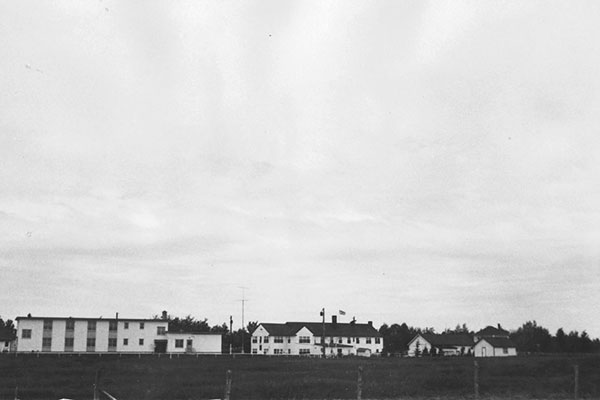
Fisher River Indian Hospital and nurses’ residence (1962)
Source: Library and Archives Canada
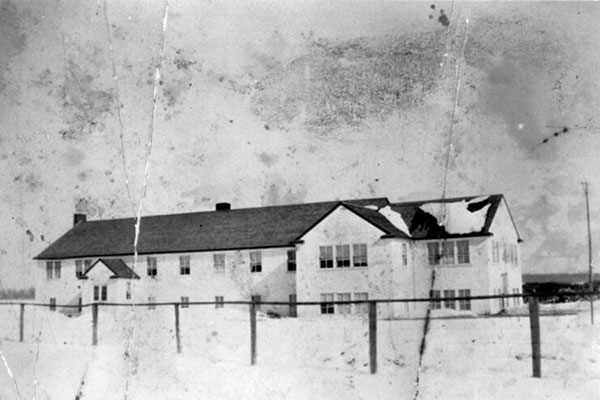
Fisher River Indian Hospital (no date)
Source: Peguis First Nation, Manitoba Museum, EP 3068Site Coordinates (lat/long): N51.30483, W97.56655
denoted by symbol on the map above
See also:
Historic Sites of Manitoba: St. Peter Dynevor Anglican Rectory / Dynevor Indian Hospital / St. John’s Cathedral Boys’ School (1147 Breezy Point Road, RM of St. Andrews)
Historic Sites of Manitoba: Clearwater Lake Indian Hospital (Northern Manitoba)
“Hospitals for Indians,” The Redcliffe Review (11 January 1940) p. 5
Road to Recovery (film), Sanatorium Board of Manitoba, c. 1950
“Fisher River Indian Hospital,” Canadian Geographic
“Fisher River Indian Hospital,” Manitoba Indigenous Tuberculosis History Project
Benita Cohen, “Health Services Development in an Aboriginal Community: The Case of Peguis First Nation,” Report for the Royal Commission on Aboriginal Peoples (1994)
“Manitoba 150 Excerpt #3: Structures of Indifference,” University of Manitoba Press, 30 June 2020. An excerpt from Mary Jane Logan McCallum and Adele Perry, Structures of Indifference: An Indigenous Life and Death in a Canadian City (2018)
Mary Jane Logan McCallum, M. Anne Lindsay, Erin Millions, “A Statement on the Incarceration of Geraldine Mason,” Manitoba Indigenous Tuberculosis History Project, 5 December 2024.
1. Maureen K. Lux, Separate Beds: A History of Indian Hospitals In Canada, 1920s-1980s (University of Toronto Press, 2016) 19.
2. Maureen Lux, “Indian Hospitals in Canada,” Canadian Encyclopedia, last edited 29 September 2024.
3. James B. Waldram, D. Ann Herring, and T. Kue Young, Aboriginal Health in Canada: Historical, Cultural, and Epidemiological Perspectives (University of Toronto Press, 2006) 178.
4. Waldram et al, Aboriginal Health in Canada, 178.
5. Lux, Separate Beds, 95.
6. Benita Cohen, “Health Services Development in an Aboriginal Community: The Case of Peguis First Nation,” Report for the Royal Commission on Aboriginal Peoples (1994) 28.
7. Cohen, “Health Services Development in an Aboriginal Community,” 27.
8. “Hospitals for Indians,” The Redcliffe Review (11 January 1940) 5.
9. Memorandum from Public Health Engineering Division: Re: Water Supply: Fisher River and Peguis Indian Reserves, Hodgson, Man. Dec. 1953?, W84-85/400, box 2, file 22-8-15, Fisher River Indian Hospital, Hodgson, Man. LAC Winnipeg.
10. Letter to J. R. Menzies, Chief, Public Health Engineering Division, June 18th, 1952, W84-85/400, box 2, file 22-8-15, Fisher River Indian Hospital, Hodgson, Man, LAC Winnipeg.
11. Monthly Nursing Report, February 10th, 1971, 1984-85/458 GAD, box 29, file 100-1-X298, Organization and Administration – Fisher River Indian Hospital, LAC Winnipeg.
12. Lux, Separate Beds, 95.
13. Memorandum regarding Report on Visit to Fisher River Hospital, October, October 24th, 1972, 1984-85/458 GAD, box 29, file 100-1-X298, Organization and Administration – Fisher River Indian Hospital, LAC Winnipeg.
14. Letter correspondence between The Regional Director of the Manitoba Region of the Medical Services Branch and Chief Sinclair, December 12th, 1972, 1984-85/458 GAD, box 29, file 100-1-X298, Organization and Administration – Fisher River Indian Hospital, LAC Winnipeg.
15. Laurie Meijer Drees, Healing Histories: Stories from Canada’s Indian Hospitals (University of Alberta Press, 2013) 52.
16. Lux, “Indian Hospitals in Canada,” Canadian Encyclopedia.
17. Samir Shaheen-Hussain, Fighting For A Hand To Hold: Confronting Medical Colonialism against Indigenous Children in Canada (McGill-Queen’s University Press, 2020) 154.
This page was prepared by Saskia Lovrien Meuwese and Erin Millions.
Saskia Lovrien Meuwese (she/her) is an Art History Honours student at the University of Winnipeg living and studying in Winnipeg, Manitoba.
Dr. Erin Millions (she/her) is a historian in the Department of History at the University of Winnipeg.
This article was produced as part of a collaborative public history project between students in the Department of History and Joint Masters History Program at the University of Winnipeg, the Southern Chiefs’ Organization, and the Manitoba Historical Society. Honours and Masters students researched and wrote digital public history articles that align with the Southern Chiefs’ Organization 25th Anniversary History Project and contribute to the expansion of Indigenous history content on the Manitoba Historical Society website. Course: Commemorating Indigenous Histories, HIST-4614/GHIST-7513, Winter 2025,
Page revised: 26 February 2026
Historic Sites of Manitoba
This is a collection of historic sites in Manitoba compiled by the Manitoba Historical Society. The information is offered for historical interest only.
Browse lists of:
Museums/Archives | Buildings | Monuments | Cemeteries | Locations | OtherInclusion in this collection does not confer special status or protection. Official heritage designation may only come from municipal, provincial, or federal governments. Some sites are on private property and permission to visit must be secured from the owner.
Site information is provided by the Manitoba Historical Society as a free public service only for non-commercial purposes.
Send corrections and additions to this page
to the MHS Webmaster at webmaster@mhs.mb.ca.Help us keep history alive!